
Key Takeaways
- Rooftop herbs cost 80% less than store-bought fresh herbs ($5 startup vs. $20-40/month)
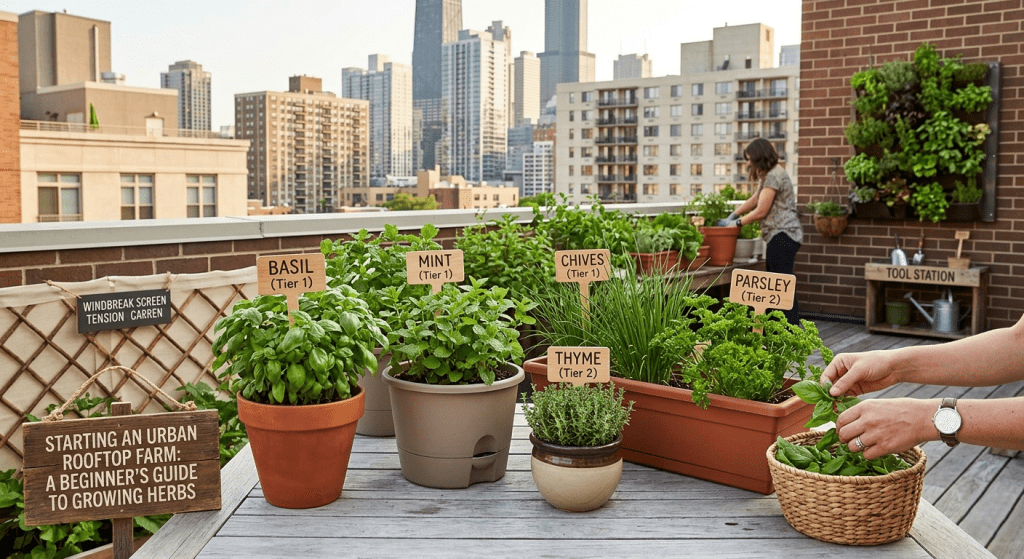
- Start with 5 easy herbs: Basil, mint, chives, thyme, and parsley survive beginner mistakes
- Container depth matters: 6 inches minimum, 12 inches ideal for most herbs
- Wind is the #1 rooftop killer—use windbreaks and heavy pots to prevent disaster
- Harvest regularly to encourage bushy growth (never take more than 1/3 of the plant)
- Winter indoors: Bring tender herbs inside before first frost for year-round harvests
An urban rooftop herb garden lets you grow fresh basil, mint, and chives right above your apartment instead of paying $3–5 per tiny grocery clamshell. Fresh herbs transform weeknight dinners from forgettable to memorable. But at $3-5 per plastic clamshell at the grocery store, that basil garnish costs more than your pasta. Urban rooftop farming solves this problem—and proves you don’t need acreage to grow your own food. A 100-square-foot rooftop can produce enough herbs to supply a family of four year-round.
Starting an urban rooftop herb garden sounds intimidating. Wind exposure. Weight limits. Access issues. But thousands of city dwellers are already harvesting basil, mint, and rosemary from their rooftops, saving hundreds annually while eating better. This guide walks you through everything: structural considerations, container selection, herb choices, and the specific techniques that keep rooftop plants alive when ground-level gardens thrive.
Why Rooftop Herb Farming Makes Sense
An urban rooftop herb garden makes financial, spatial, and environmental sense for city dwellers.
The Financial Case
Fresh herbs are among the most expensive groceries per pound. A single ounce of fresh basil costs $3-4 at most supermarkets. That’s $48-64 per pound—more than most steaks.
According to the USDA, food waste and higher fresh produce prices make growing herbs at home even more valuable.
Growing your own slashes this dramatically:
- Startup costs: $50-150 for containers, soil, seeds/seedlings
- Monthly harvest value: $20-40 in replaced grocery purchases
- Payback period: 2-4 months
- Annual savings: $240-480 after initial investment
Unlike vegetables that require succession planting and careful timing, herbs are cut-and-come-again. One basil plant produces 4-6 ounces of leaves weekly during peak season. Three plants = $36-72 monthly value from a $5 investment.
Space Efficiency
Rooftops are often the only unused outdoor space in cities. A typical city rooftop has 200-500 square feet of unused area. Herb containers need minimal space:
- Individual herb pots: 6-8 inches diameter each
- Railing planters: Use vertical space, zero footprint
- Vertical herb walls: 20+ plants in 4 square feet
- Window boxes: Supplement rooftop growing
Ten herb containers fit comfortably on a 4×4 foot area—enough to supply a household with fresh herbs year-round.
With a well-planned urban rooftop herb garden, even renters can grow enough herbs to stop buying plastic-packaged bundles at the store.
Even a small urban rooftop herb garden with 6–10 containers can supply most of your fresh herb needs year-round.
Assessing Your Rooftop: Critical First Steps
Structural Considerations
Before buying a single pot, verify your rooftop can handle the load. Wet soil weighs 100-120 pounds per cubic foot. A 20-gallon container filled with wet soil weighs 180-200 pounds.
Weight Guidelines:
- Residential rooftops: Typically rated 40-50 psf (pounds per square foot)
- Commercial rooftops: Often rated 100+ psf
- Container gardens: Plan for 25-35 psf with proper distribution
Safety Checklist:
- Consult building manager or structural engineer if unsure
- Distribute weight evenly—don’t cluster all containers in one area
- Use lightweight potting mix (not garden soil)
- Consider self-watering containers (less water = less weight)
- Avoid large rain barrels without structural approval
Wind Exposure Assessment
Wind is the single biggest challenge for rooftop gardens. Ground-level gardens have buildings, trees, and fences as windbreaks. Rooftops have nothing.
Wind Speed Reality: Rooftop wind speeds are typically 2-3 times higher than ground level. A 10 mph breeze at street level becomes 20-30 mph on your roof.
Wind Solutions:
- Install windbreaks: Lattice panels, bamboo screens, or tensioned shade cloth (50% density)
- Use heavy containers: Terracotta, concrete, or weighted plastic pots
- Group plants: Creates microclimate and mutual protection
- Stake tall herbs: Rosemary and lavender need support in windy locations
- Avoid top-heavy designs: Low, wide containers resist tipping
Sun Exposure Mapping
Most culinary herbs need 6-8 hours of direct sunlight. Track your rooftop’s sun patterns before planting:
- Full sun (6-8+ hours): Basil, rosemary, thyme, oregano, sage, lavender
- Partial sun (4-6 hours): Parsley, cilantro, chives, mint
- Shade tolerant (2-4 hours): Mint, parsley, cilantro (with reduced yields)
Spend a day observing your rooftop. Note which areas get morning sun vs. afternoon sun. South-facing rooftops get maximum light; north-facing may need supplemental growing lights.
Essential Equipment and Setup
Container Selection
Best Container Types:
Self-Watering Containers
- Pros: Consistent moisture, less frequent watering, wind-resistant
- Cons: More expensive, can overwater in rainy seasons
- Best for: Basil, parsley, cilantro (moisture-loving herbs)
- Cost: $15-30 each
- Check
DIY Self-Watering Planter: 2 Easy 10-Minute Methods (from a Plastic Bottle)
Terracotta/Clay Pots
- Pros: Heavy (wind-resistant), breathable, classic look
- Cons: Dries out quickly, breaks easily, heavy when moving
- Best for: Rosemary, thyme, oregano (drought-tolerant herbs)
- Cost: $10-25 each
Fabric Grow Bags
- Pros: Excellent drainage, air-prunes roots, lightweight, inexpensive
- Cons: Dries out very fast, less wind-stable, shorter lifespan
- Best for: Temporary setups, budget-conscious growers
- Cost: $5-15 each
Wooden Boxes/Planters
- Pros: Attractive, good insulation, customizable size
- Cons: Can rot over time, heavier when wet
- Best for: Permanent installations, multiple herb plantings
- Cost: $30-80 each
Container Size Guidelines:
- Small herbs (thyme, oregano): 6-8 inch diameter, 6 inch depth
- Medium herbs (basil, parsley): 8-10 inch diameter, 8-10 inch depth
- Large herbs (rosemary, lavender): 12-14 inch diameter, 12+ inch depth
Soil and Drainage
Never use garden soil in containers. It compacts, drains poorly, and may contain pests. Use quality potting mix designed for containers.
Recommended Soil Mix:
- 60% high-quality potting mix (peat or coir-based)
- 30% compost (for nutrients)
- 10% perlite or vermiculite (for drainage)
Drainage Requirements:
- All containers MUST have drainage holes
- Elevate pots on pot feet or bricks (prevents waterlogging)
- Add saucers only if rooftop drainage is a concern
- Check drainage monthly—roots can block holes
Watering Systems
Rooftop containers dry out faster than ground gardens. Plan your watering strategy before planting.
Manual Watering:
- Time commitment: 10-15 minutes daily in summer
- Equipment: Watering can or hose with gentle nozzle
- Tip: Water early morning to reduce evaporation
Drip Irrigation:
- Time commitment: 1 hour setup, then 5 minutes weekly checking
- Equipment: Timer, tubing, emitters ($50-100 for small setup)
- Tip: Connect to outdoor spigot if available
Self-Watering Containers:
- Time commitment: Refill reservoirs 1-2 times weekly
- Equipment: Built-in reservoirs
- Tip: Best for busy growers or frequent travelers
Best Herbs for Rooftop Beginners
Tier 1: Nearly Impossible to Kill
Basil
- Difficulty: Easy
- Sun: 6-8 hours
- Water: Keep consistently moist
- Harvest: 4-6 weeks from seed, continuous after
- Notes: Pinch flowers to extend leaf production. Replace annually.
- Value: $3-4 per bunch at store
Mint
- Difficulty: Easy (invasive—always container-only!)
- Sun: 4-6 hours
- Water: Keep moist
- Harvest: 3-4 weeks from planting, continuous
- Notes: Spreads aggressively. One plant is enough.
- Value: $3-4 per bunch at store
Chives
- Difficulty: Easy
- Sun: 4-6 hours
- Water: Moderate, let dry slightly between waterings
- Harvest: 6-8 weeks from seed, cut-and-come-again
- Notes: Perennial. Dies back in winter, returns in spring.
- Value: $3-4 per bunch at store
Tier 2: Moderate Care Required
Parsley
- Difficulty: Moderate
- Sun: 4-6 hours
- Water: Keep moist, not soggy
- Harvest: 8-10 weeks from seed, outer leaves first
- Notes: Biennial. Slower to germinate (3-4 weeks).
- Value: $3-4 per bunch at store
Cilantro
- Difficulty: Moderate
- Sun: 4-6 hours (afternoon shade in hot climates)
- Water: Keep moist
- Harvest: 6-8 weeks from seed
- Notes: Bolts quickly in heat. Succession plant every 3 weeks.
- Value: $3-4 per bunch at store
Thyme
- Difficulty: Moderate
- Sun: 6-8 hours
- Water: Let dry between waterings
- Harvest: 8-10 weeks from seed, continuous
- Notes: Perennial. Slow-growing but long-lived.
- Value: $3-4 per package at store
Tier 3: Advanced (Wait Until You Have Experience)
Rosemary
- Difficulty: Advanced for containers
- Sun: 8+ hours
- Water: Let dry completely between waterings
- Harvest: 12+ weeks from seed (buy established plants)
- Notes: Perennial. Needs excellent drainage. Bring indoors in cold climates.
- Value: $4-5 per package at store
Lavender
- Difficulty: Advanced
- Sun: 8+ hours
- Water: Minimal once established
- Harvest: Flowers in year 2+
- Notes: Perennial. Needs excellent drainage and airflow.
- Value: $5-8 per bunch at store
Planting and Maintenance Calendar
Spring (March-May)
- Week 1-2: Clean and sanitize containers from previous year
- Week 3-4: Start seeds indoors or buy established seedlings
- Week 5-6: Transplant outdoors after last frost date
- Week 7-8: Begin light harvesting once plants establish
- Ongoing: Water daily, fertilize monthly with balanced fertilizer
Summer (June-August)
- Harvest: 2-3 times weekly for peak production
- Water: Daily in hot weather, possibly twice daily
- Fertilize: Every 2-3 weeks with liquid fertilizer
- Pinch flowers: On basil and cilantro to extend leaf production
- Watch for pests: Aphids, spider mites common in hot weather
Fall (September-November)
- Early fall: Continue harvesting, reduce fertilizing
- Mid-fall: Take final large harvest before frost
- Late fall: Bring tender herbs indoors or take cuttings
- Before frost: Harvest and freeze/dry excess herbs
Winter (December-February)
- Indoor herbs: Place in south-facing window, water less frequently
- Outdoor perennials: Mulch heavily, protect from wind
- Plan: Order seeds, plan next year’s layout
- Grow lights: Supplement natural light for indoor herbs (12-14 hours daily)
Common Rooftop Herb Problems and Solutions
Problem: Leaves Turning Yellow
Causes:
- Overwatering (most common)
- Poor drainage
- Nutrient deficiency
Solution:
- Let soil dry 1-2 inches deep before watering
- Check drainage holes aren’t blocked
- Apply balanced liquid fertilizer monthly
Problem: Wilting Despite Watering
Causes:
- Root rot from overwatering
- Wind damage
- Heat stress
Solution:
- Check roots—if brown and mushy, repot with fresh soil
- Install windbreaks
- Provide afternoon shade during heat waves
Problem: Leggy, Sparse Growth
Causes:
- Insufficient sunlight
- Not harvesting/pruning enough
Solution:
- Move to sunnier location (6-8 hours minimum)
- Harvest regularly to encourage bushy growth
- Pinch off top growth to promote side branching
Problem: Pests (Aphids, Spider Mites)
Organic Solutions:
- Spray with strong water stream to dislodge pests
- Apply neem oil weekly (evening application)
- Introduce beneficial insects (ladybugs, lacewings)
- Companion plant with marigolds (natural pest deterrent)
Pro-Tip from the Shop
Propagate herbs from cuttings instead of buying new plants every year. Snip 4-inch stems from healthy plants, remove lower leaves, place in water until roots form (1-2 weeks), then plant in soil. This works perfectly with basil, mint, oregano, and thyme. One $4 store-bought basil plant can become 10+ plants through propagation—saving $30-40 annually.
Harvesting and Preservation
Harvesting Best Practices
- Time of day: Harvest in morning after dew dries (peak oil content)
- How much: Never take more than 1/3 of the plant at once
- Method: Use clean scissors, cut just above leaf nodes
- Frequency: Harvest regularly to encourage growth
Preservation Methods
Freezing (Best for Basil, Cilantro, Parsley)
- Wash and dry herbs thoroughly
- Chop finely
- Place in ice cube trays, cover with olive oil or water
- Freeze, then transfer to freezer bags
- Use directly from freezer in cooking
- Shelf life: 6 months
Drying (Best for Rosemary, Thyme, Oregano, Sage)
- Tie herbs in small bundles
- Hang upside down in warm, dry, dark place
- Wait 2-3 weeks until completely dry
- Strip leaves from stems, store in airtight jars
- Shelf life: 1 year
Herb-Infused Oil
- Fill jar with fresh herbs
- Cover with olive oil
- Store in refrigerator (prevents botulism risk)
- Use within 1 month
Cost Breakdown: Rooftop Herbs vs. Store-Bought
| Item | Rooftop Farm Cost | Store-Bought Cost | Annual Savings |
|---|---|---|---|
| Basil (weekly) | $5 (one-time plant) | $156 ($3/week) | $151 |
| Parsley (weekly) | $4 (one-time plant) | $156 ($3/week) | $152 |
| Cilantro (biweekly) | $4 (succession planting) | $78 ($3/2 weeks) | $74 |
| Mint (monthly) | $4 (one plant, perennial) | $48 ($4/month) | $44 |
| Thyme/Rosemary | $10 (two plants) | $104 ($4/month combined) | $94 |
| Chives | $4 (one plant, perennial) | $52 ($4/month) | $48 |
| Containers/Soil | $75 (one-time) | N/A | -$75 |
| Year 1 Total | $106 | $594 | $488 |
| Year 2+ Total | $31 | $594 | $563 |
Note: Year 2+ assumes reusing containers, replacing only annual herbs. Perennials (mint, thyme, rosemary, chives) continue producing with minimal cost.
An urban rooftop herb garden delivers constant fresh flavor, $500+ annual savings, and a calming green space in the middle of the city.
Final Thoughts
Starting an urban rooftop herb garden isn’t just about saving money—though $500+ annual savings is nothing to sneeze at. It’s about connection. Snipping fresh basil for tonight’s pasta. Crushing mint for evening tea. Watching something you planted thrive against the urban skyline.
Begin small. Three containers. Basil, mint, and chives. Learn their rhythms. Watch how they respond to wind and sun and your attention. Then expand. Add parsley. Try thyme. Experiment with rosemary.
Your rooftop has potential. That empty space can become a productive farm that feeds you, saves you money, and reminds you that even in the densest city, you can grow something real.